
QUIP-RS
Investigating The Effects of a Double-Hit Developmental Stress Model
QUIP-RS
Investigating The Effects of a Double-Hit Developmental Stress Model
This study, conducted by Julia Mathews '26 and Payton Sack '26 under the mentorship of Dr. Adrienne Betz, aims to examine the behavioral and molecular consequences of the double-hit model of stress in a developmental context.
Overview
In this study, Julia Mathews '26 and Payton Sack '26 investigated the behavioral effects of a double-hit developmental stress model consisting of maternal separation (MatSep) and chronic unpredictable stress (CUS) in a preclinical model.
Student Researchers

Julia Mathews '26
Behavioral Neuroscience
College of Arts & Sciences - School Name

Payton Sack '26
Behavioral Neuroscience
College of Arts & Sciences - School Name
Investigating The Effects of a Double-Hit Developmental Stress Model on Behavioral, Physiological, and Microglial Outcomes
Project Overview
We investigated the behavioral effects of a double-hit developmental stress model consisting of maternal separation (MatSep) and chronic unpredictable stress (CUS) in a preclinical model. We hypothesized that MatSep and CUS would cause more pronounced depressive-like phenotypes and greater stress susceptibility than either stressor alone. Behavioral tests were conducted to compare anxiety-like behaviors across all groups and we aimed to identify cellular changes related to stress.
Specifically, we planned to examine the neurobiological effects of MatSep and CUS by analyzing the expression of a glucocorticoid receptor mediator in microglia of the hippocampus. We hypothesized the expression would be elevated in groups exposed to both MatSep and CUS, suggesting an impaired stress regulatory system.
Working with microglia proved to be more difficult than anticipated, so while troubleshooting took place, we shifted the project’s focus to examine how stress impacts the meninges. The meninges are a protective layer of the central nervous system (CNS). At this time, data from only the MatSep group was collected for the meninges. We examined two proteins, ERK1/2 and Occludin, via Western Blot. ERK1/2 is important in responding to stress and inflammation in meningeal cells. Occludin’s importance is based more heavily on regulating the integrity of the meninges and their tight junctions.
Our primary finding was a sex difference in occludin expression, which appears to be influenced by hormonal factors, particularly estrogen. Together, our work provides insight into how early-life and chronic stress influence both behavioral and cellular responses.
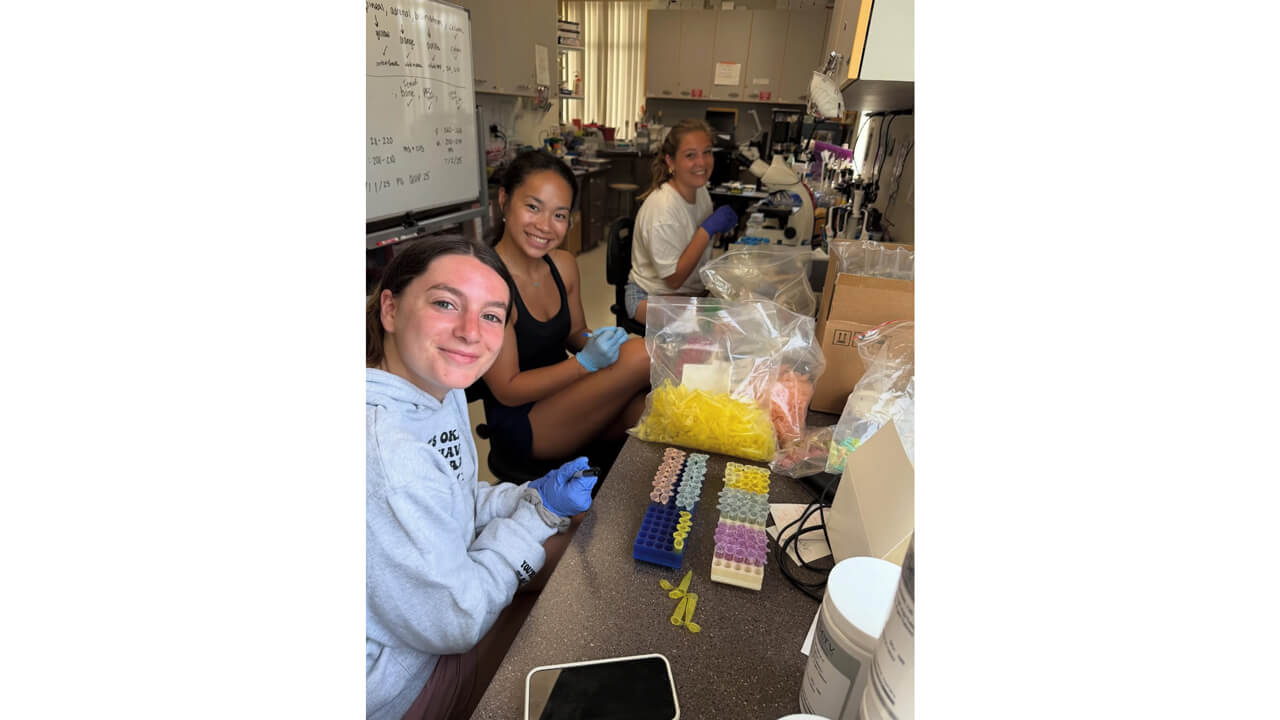
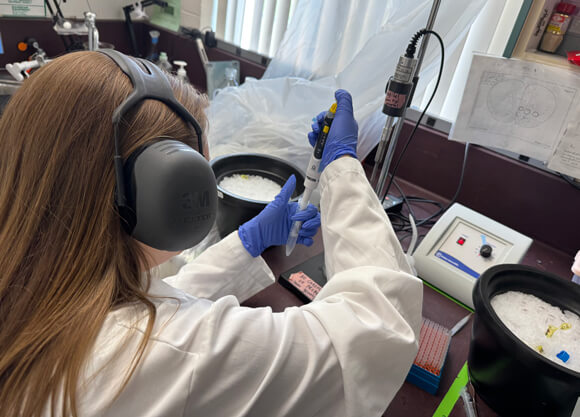
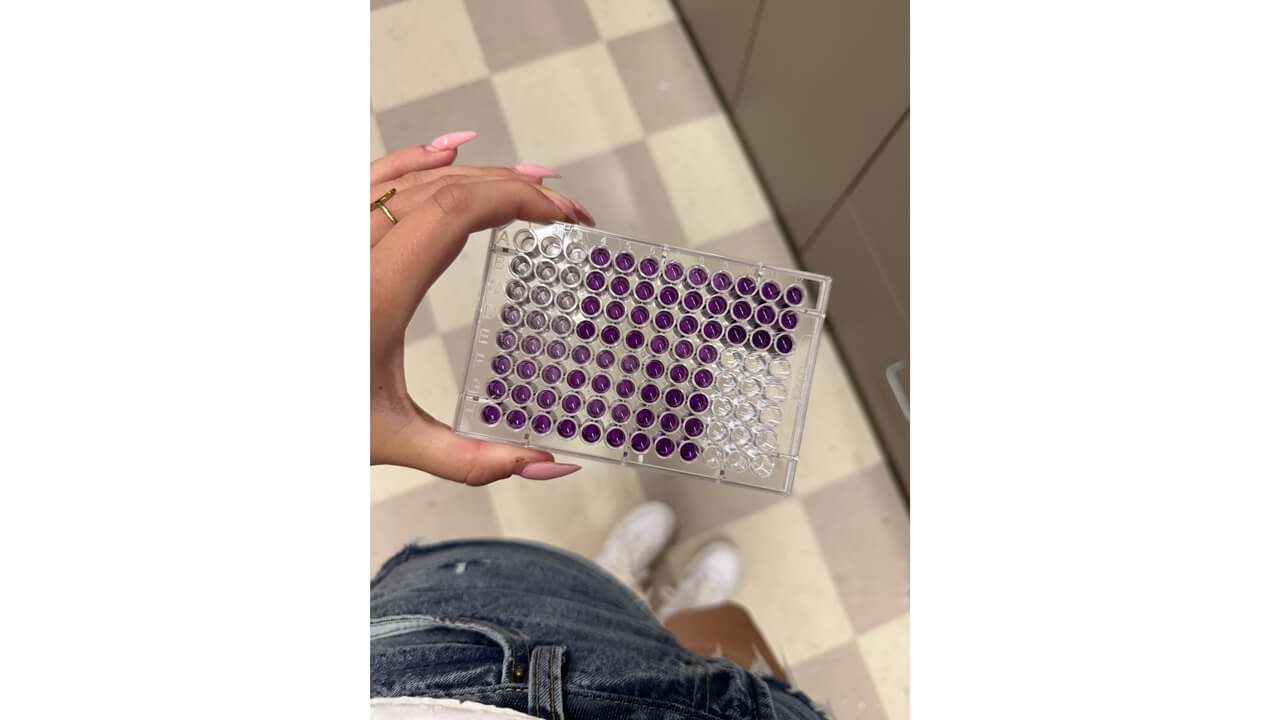
Photographs from the Research Process
Faculty Researcher & Mentor
For Further Discussion
This serves as an overview of the project and does not include the complete work. To further discuss their role in this project, please email Adrienne Betz.
Quinnipiac University Interdisciplinary Program for Research and Scholarship
Open to students of all majors, QUIP-RS provides up to $5,000 in funding for undergraduate students to conduct research or complete creative projects alongside faculty mentors. This intensive 8-week program enables students to develop scholarly skills while encouraging discussion about successes and shortcomings with fellows and mentors.
Explore Our Areas of Interest
We've sorted each of our undergraduate, graduate and doctoral programs into unique Areas of Interest. Explore these categories to discover which programs and delivery methods best align with your educational and career goals.
Explore Health and Medicine at Quinnipiac