
Chemistry
Optimization of Extraction and Quantification of Antioxidants from Whole Foods
Chemistry
Optimization of Extraction and Quantification of Antioxidants from Whole Foods
Gianna Gorvan ’24, MS ’25 carried out this study to determine the most effective methods of extraction and quantification of these antioxidants in whole foods.
Overview
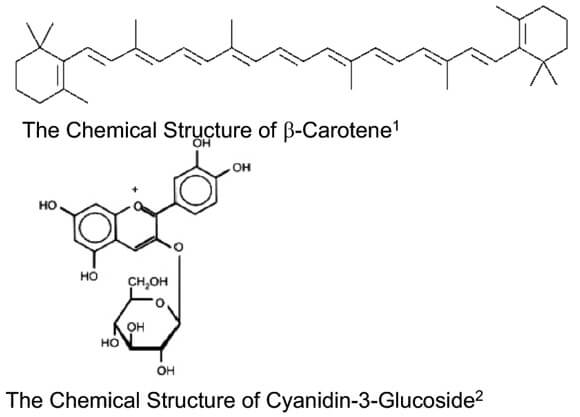
This study was aimed at optimizing the extraction and determination of the antioxidants, specifically β-Carotene and the anthocyanin, Cyanidin-3-Glucoside. These antioxidants are found present in highly pigmented raw fruits and vegetables, most notably β-Carotene is found in sweet potatoes and Cyanidin-3-Glucoside in blackberries.
Researcher

Gianna Gorvan ’24, MS '25
Biochemistry
College of Arts & Sciences - School Name
Optimization of Extraction and Quantification of Antioxidants from Whole Foods Using Simple UV-Visible Assay
Project Summary
The importance of antioxidants lies in their ability to stabilize oxygen molecule free radicals, which limits the cellular damage caused by oxidative stress in an organism.
To pursue this study, the multiple extraction systems used included investigative techniques in pH-balanced solutions, vacuum filtration, and ultrasonic extraction, all of which varied depending on the structure of the whole food sample. Standard addition and Solid Phase Extraction (SPE) were also used to enable precise statistical quantitation by UV-Visible spectrophotometric assays in the range 400-700 nm, which allowed for the determination of exactly where the, and how much of the β-Carotene and Cyanidin-3-Glucoside was being extracted from each sample.
Spectra of each natural antioxidant pigment were quantified using external standard curves and the standard addition method of β-Carotene and the Anthocyanin, Cyanidin-3-Glucoside, to determine the concentrations present as micrograms per gram in each food sample. Samples for this experiment included cantaloupe, sweet potato flesh, broccoli, and pumpkin flesh for the extraction of β-Carotene, and blackberries, purple grapes, purple-fleshed potatoes, and the skin of an eggplant for the extraction of Cyanidin-3-Glucoside.
Through the implementation of these techniques, this study aimed to contribute to the enhancement of methods for precisely assessing the antioxidant presence in food samples.
Professional Application
“As someone with a strong passion for both science and healthcare, I feel that this project was exactly what I needed. This project has truly solidified my interest in research and the sciences, but has also allowed me to explore something that is not a typical chemistry project. Getting to explore antioxidants, something that directly affects human health has allowed me to combine my interests and further develop my understanding of my field. I will take the plethora of not only knowledge, but skills ranging from laboratory techniques and scientific writing to effectively problem solving with me, no matter where my career takes me.” – Gianna Gorvan ’24, MS ’25
For Further Discussion
This serves as an overview of the project and does not include the complete work. To discuss this project further, please email Gianna Gorvan or Professor Mark Collins.
Course Overview
CHE 476: Chemistry Seminar is a research seminar for senior chemistry and biochemistry majors. Students attend research group meetings and outside seminars. Students prepare and present a seminar and a poster presentation on their research project.
Explore Our Areas of Interest
We've sorted each of our undergraduate, graduate and doctoral programs into unique Areas of Interest. Explore these categories to discover which programs and delivery methods best align with your educational and career goals.