
Sociology
Youth Involvement in Gun Violence: A Public Health Crisis
Sociology
Youth Involvement in Gun Violence: A Public Health Crisis
Emma Gacek '25 planned out a new study on how parental gun ownership influences youth involvement in gun violence. This project proposal was developed for the course SO 400: Senior Seminar.
Overview
In 2022, firearms were the leading cause of death among youth with nearly 7 adolescents dying per day. In 2024, gun violence was declared a national public health crisis. Previous research has found minority youth from urban areas disproportionately experience gun violence, both the use of guns and the impact of gun violence. In addition, existing research has discovered several influences that mediate youth’s potential involvement in gun violence. However, it is unclear how parental gun ownership factors into gun use by youth. Thus, Emma Gacek '25 proposed research to further close the gap in scholarly knowledge by determining if or how parental gun ownership affects youth’s risk of engaging in gun violence.
Researcher
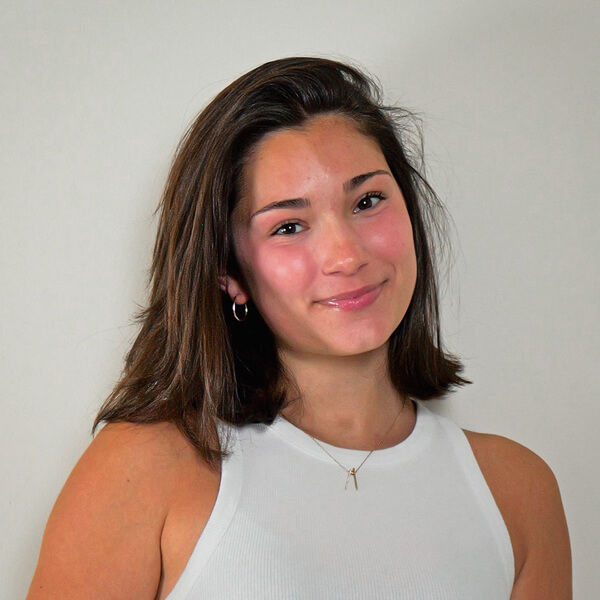
Emma Gacek '25
Sociology
College of Arts & Sciences - School Name
Youth Involvement in Gun Violence: A Public Health Crisis
Project Summary
This research aims to investigate how parental gun ownership influences youth involvement in gun violence. The study will explore the relationship between gun ownership in households and the likelihood of youth (ages 13–18) engaging in gun violence. In this study, youth gun violence is defined as the circumstances in which a youth intentionally uses a firearm to threaten or harm others. In 2022, firearms were the leading cause of death among youth with nearly 7 adolescents dying per day. In 2024, gun violence was declared a national public health crisis. Previous research has found minority youth from urban areas disproportionately experience gun violence, both the use of guns and the impact of gun violence. In addition, existing research has discovered several influences that mediate youth’s potential involvement in gun violence. However, it is unclear how parental gun ownership factors into gun use by youth. This proposed research will further close the gap in scholarly knowledge by determining if or how parental gun ownership affects youth’s risk of engaging in gun violence. In-depth interviews will be utilized to collect information from participants located in rural Montana, the state with the highest gun ownership rate of 66.3%. This research strives to provide data that will guide policy and prevention programs, specifically for my partner organization Brady United Against Gun Violence. Through this partnership, programs will focus on reducing involvement in gun violence among minority youth living in disadvantaged neighborhoods.
Researcher Bio
My name is Emma Gacek and I am qualified to conduct this research due to my background in sociology as well as health, medicine, and society. My field of study allows me to approach gun violence through a sociological lens, considering factors like race, class, and neighborhood influences. This perspective helps tailor my research questions and target population to better understand the social dynamics impacting those most affected by gun violence. My education in research methods and statistics has equipped me with the foundational skills needed for effective research. Additionally, my internships with IRIS-Integrated Refugee and Immigrant Services as well as The City of New Haven Public Health Department developed my leadership and problem-solving skills. These internships also provided exposure to diverse groups and ways of thinking which in turn, further prepared me to conduct a successful study.
Literature Review
The literature review identifies several themes that act as risk and protective influences for youth’s engagement in gun violence, those include:
Sociodemographic Characteristics
- Race/Ethnicity
- Socioeconomic Class
- Gender
Predictive Influences
- Violence
- Involvement in Drugs
- Negative Social Influences
- Poor Mental Health and Biological Predictors
- Antisocial Characteristics
Parental Disengagement
- Protective Influences
- Prosocial Characteristics
- Parental Involvement
Lastly, research demonstrated the association between youth firearm suicide rates and household gun ownership rates.
Research Plan
My research question is, ‘How does parental gun ownership influence youth involvement in gun violence?’
My independent variable is parental gun ownership which is defined as parents (or guardians) owning and storing a gun(s) in the home while children also live in the home.
My dependent variable is youth involvement in gun violence which is defined as the circumstances in which a youth (ages 13-18) intentionally uses a firearm to threaten or harm others.
The method for this study will be in-depth interviews intermittently until the child is 18. I will purposefully sample from rural Montana. Sampling will include households that have parents (or guardians) who own 1 or more firearms and have children living in the home. Interviews will be conducted with the parents or guardians of the household.
Ethical issues of participants’ informed consent, participants’ voluntary participation, and participants’ confidentiality have been taken into consideration
Timeline
September 2025
Recruit interviewees. Begin interviewing process.
October – December 2025
Continue interviews and begin analyzing interview data.
January 2026
Write preliminary report. Submit to Brady United for feedback.
February 2026
Revise report based on the feedback from Brady United.
March 2026
Submit final report to Brady United.
Partner Organization
Brady: United Against Gun Violence (Brady United)
Brady United Against Gun Violence is my partner organization. Brady United strives to unite Americans to reduce gun violence and death. Brady United utilizes a 3-pronged approach to reducing gun violence: policy reform, industry oversight, and cultural change. Brady United prioritizes research and evidence-based solutions to combat gun violence.
By further understanding predictors and risk factors for youth involvement in gun violence, this research will enable Brady United to better advocate for policy changes on state and federal levels. Brady United will also be able to promote information and educate parents on the risks surrounding guns in the home and how this translates to youth’s possible engagement in gun violence.
Budget
| 128GB Digital Voice Recording Device | 1 | $45 |
| Travel Costs | 40 mi / 1 participant | $2,200 |
| Poland Spring Water | 2 Cases | $20 |
| Transcription Cost | 100 Hours | $2,000 |
| Remuneration | 25 Gift Cards | $625 |
| Total | $4,890 |
For Further Discussion
This serves as an overview of the project and does not include the complete work. To further discuss this project, please email Emma Gacek.
Course Overview
SO 400: Senior Seminar is designed as the capstone course for students majoring in sociology and gerontology. Students research a sociological or aging-related topic of their choosing and write a thesis based on their work. All senior theses represent a culmination of majors' academic experiences in the department.
Explore Our Areas of Interest
We've sorted each of our undergraduate, graduate and doctoral programs into unique Areas of Interest. Explore these categories to discover which programs and delivery methods best align with your educational and career goals.
Explore Humanities and Culture at Quinnipiac
Explore Social Sciences at Quinnipiac
References
Beardslee, Jordan, Edward Mulvey, Carol Schubert, Paul Allison, Arynn Infante, and Dustin Pardini. 2018. “Gun- and Non-Gun–Related Violence Exposure and Risk for Subsequent Gun Carrying among Male Juvenile Offenders.” Journal of the American Academy of Child & Adolescent Psychiatry 57(4):274–79.
Docherty, Meagan, Jordan Beardslee, Kevin J. Grimm, and Dustin Pardini. 2019. “Distinguishing Between- from Within- Individual Predictors of Gun Carrying among Black and White Males across Adolescence.” Law and Human Behavior 43(2):144–55.
Pardini, Dustin, Jordan Beardslee, Meagan Docherty, Carol Schubert, and Edward Mulvey. 2020. “Risk and Protective Factors for Gun Violence in Male Juvenile Offenders.” Journal of Clinical Child & Adolescent Psychology 50(3):337–52.
Shetgiri, Rashmi, DenisePaquette Boots, Hua Lin, and Tina L. Cheng. 2016. “Predictors of Weapon-Related Behaviors among African American, Latino, and White Youth.” The Journal of Pediatrics 171:277–82.